

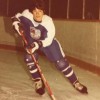
We've all seen it: a coach yelling at a player in practice. A coach talking sternly to a player on the bench, maybe even grabbing a jersey to get his attention. But given the new focus on the behavior of coaches at the National Hockey League level, it raises the question: Is a sea change coming in the way hockey is coached at all levels?
This has been brought to the fore by events surrounding the resignation of Calgary Flames coach Bill Peters, the firing of Dallas Stars coach Jim Montgomery, the disciplining of Chicago Blackhawks assistant coach Marc Crawford and the stories of seemingly inappropriate motivational tactics by former Toronto Maple Leafs coach Mike Babcock.
The coaching fraternity in hockey is not all that big: It seems most everyone has a degree of separation from an NHL coach, has worked with a college coach, has played with a minor-pro coach. Coaches are coaches, no matter what the level.
Which makes it worth checking in on how New England prep hockey deals with inappropriate behavior by coaches.
Geoff Barlow, athletic director at Avon Old Farms, said checks and balances are in place to make sure any inappropriate behavior is investigated properly.
"We try to monitor it at all times and all seasons," Barlow said. "We have a lot of teams here, so there’s a lot of coaches and different coaching styles, but we’re able to monitor it. Me and our other athletic director are around all the time to just view practices and kind of pop in and out of different situations to make sure everything is going well and the kids are getting treated fairly. But, yeah, there are some complaints that will come in and we deal with them as we need to."
John Gardner, head coach of Avon Old Farms since 1975, has seen some things that wouldn't fly today.
"At football practice, we had this kid who kept screwing up, so we made him, the whole practice, put on a dunce cap, which was essentially a big cone shaped like a dunce cap, and he had to wear that on top of his head the whole practice," Gardner said. "When you think back on it, it’s probably a really demeaning, demoralizing thing for him to do."
Part of what's changing the approach of coaches is technology. Today, players — and kids in general — are more connected to parents than ever before through phones.
"You change lines, and even before the kid has gone on the ice for practice, a text has gone home to Mom and Dad," Barlow said.
"Instead of just sucking it up and playing better, they text Mommy or Daddy, and then Mommy or Daddy thinks they have to get involved," Gardner said.
Giuliano Fantilli, father of Kimball Union stars Adam and Luca, hasn't seen much in the way of physical confrontation — one former NHL coach was accused of kicking a player while on the bench — but he has seen some questionable behavior.
"I haven’t seen anything physical, maybe grabbing a jersey here and there, yanking him back, something like that," said Fantilli, whose sons came up through the super-passionate minor-hockey system in Toronto. "It’s more about how coaches put winning first, especially at such a young age. It’s so important that they win that they forget that they’re developing kids. When you’re going through it with kids at a young age and you don’t know much about the process, a lot of times you just kind of accept it, you think it’s just the way it is, right? Getting yelled at is normal. When you get older and you get more experience, you get with different kinds of coaches, as a parent you start to learn that that’s not the only way to get kids to develop and respond to what you want them to do.
"I think a lot of these coaches need to learn what’s acceptable and what’s not acceptable. So, I guess the reckoning that has been coming, that has been happening the last little while, I think it’s going to do a lot to correct that."
Tim Whitehead, coach of Kimball Union, also spent 12 years as coach of Maine at the NCAA level. He agreed that the changing times should mean changing attitudes for coaches — to a point.
"I know the climate is changing as far as coach-and-player relationships, and coach-and-parent relationship," Whitehead said, "but I still think there’s a place for good, honest feedback and it’s absolutely essential, in fact, for helping players improve and grow, both as players and people, and leaders and teammates. So there’s obviously a point of diminishing returns where if you’re too tough or too honest, the relationship can go sour and that doesn’t benefit anybody.
"You can yell and bark all you want, but if you’re not making a real connection with that player, that’s only going to carry you so far. The truth is you need to connect with them, make a real connection with them where they trust you and believe in you or you’re not going to get past the surface of telling them what to do. Because the real growth for athletes is when they take ownership and make the right decisions for themselves in every situation, on and off the ice."
Fostering that independence comes through drawing the line as a coach, Whitehead added.
"There are non-negotiables that I think all players need to follow through on and every coach has those," he said. "Points of emphasis, rules, or structure of the team, where the team comes first, and certain defensive responsibilities and sacrifices off the ice, those kind of things, those are non-negotiables. But there has to be some freedom for the player to make decisions and make plays on their own, because the coach can’t follow them out onto the ice when the puck is dropped."
For Gardner, a coach's behavior behind the bench has a trickle-down effect to the players. He was especially concerned with dishonest tactics, shown most obviously by coaches lying about line changes on icing calls. Barlow said leadership by example is key in those instances.
"Kids look to you all the time in that situation," he said. "Every time."
At the end of the day, Barlow said comparing the pro and prep coaching approaches isn't exactly accurate.
"It’s two different animals, as far as I’m concerned," he said. "Where (our kids) are in their development, where they are maturity-wise, you need to treat them with a very different outlook than you need to treat a professional hockey player because you’ll lose them in a second if you ... even yell at them at this point, you feel as though they’ll kind of go into their shell, and it’s really hard at that point to get them back. So, I understand the pro coaches may have a little more flexibility on that, but for us, if we ever came out with that sort of attitude and that coaching style, we’d lose (the players) in a second."
Age at the pro level is a factor as well, Whitehead said.
"The other thing that’s developed in the National Hockey League is that it’s gotten a lot younger," he said. "So, it’s one thing when a coach is yelling at a 30-year-old guy on the bench to pick up the pace. It’s another thing to yell at an 18-year-old who’s never been yelled at before. That’s definitely part of what you’re seeing, is not only is the league getting younger, but some of the league’s best players are quite young.
"Kids are more prepared, more ready to make an impact, but emotionally they’re still teenagers or young adults. As I’m sure you’ve seen the research, the frontal lobes don’t fully develop in young men until they’re 25, so that tells you you’ve got a lot of 18- to 25-year-olds on these NHL hockey teams, AHL teams and obviously in college and high school. So you’ve got kids who look like men and play like men, but emotionally they’re not there yet. And then again you have got some coaches who haven’t adjusted to the times. ... They’re not relating well to these younger players, to parents that are more involved, advisers that are more involved and media that’s more attuned to the coach-player relationship, all those things. It’s a combination of all those things."
Whitehead said we're seeing this change in hockey, but it's going on elsewhere, too.
"I’m not surprised it’s developing this way, it’s been trending toward this for many years, it’s been a gradual process, just like it has in the workplace," he said. "People are much more aware, as they should be, of treating others with respect. Sports, the military, it’s taken them awhile to catch up to the workplace, and as you know, the workplace, there are a lot of awful things happening there as well, and because they’re not in the news as often, you don’t hear about them as much. So, I don’t think it’s any different than the regular population; same things are happening in all professions."
Paul Grant is an editor and a writer for HockeyJournal.com and Seamans Media. He previously oversaw hockey content at ESPN.com and Sporting News. You can connect with him at pgrant@hockeyjournal.com.