

Women's college hockey annually boasts plenty of New England natives and prep hockey alums making their marks across the nation.
That was no different this past season, as many NEPSAC products were among the top skaters in the NCAA.
Former Phillips Andover standout Molly Boyle (Scituate, Mass.) earned a second-team All-American nod as a freshman at Yale. Her 38 points in 33 games were good enough for fourth among all NCAA defenders.
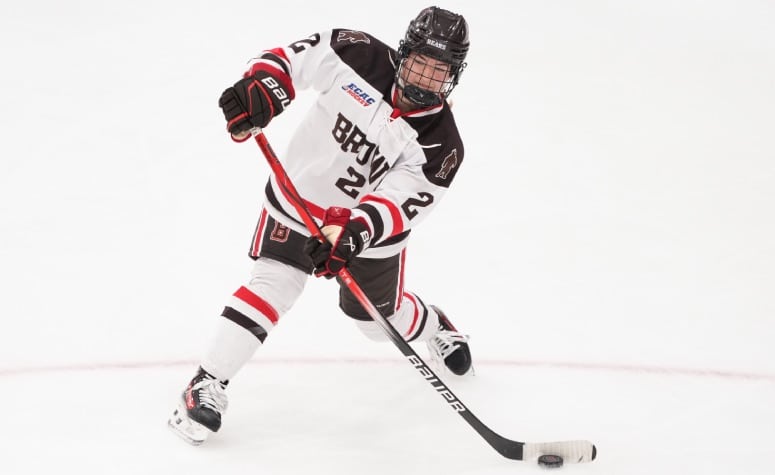
Meanwhile, former Governor's standout Lily Shannon (Andover, Mass.) was a top producer with 43 points in 39 games as a senior at Northeastern. Williston Northampton standout Monique Lyons (Bedford, Mass.) wasn't far off with 39 points in 32 games as a sophomore at Brown.
In the crease, former Portsmouth Abbey goalie Katie DeSa (Pawcatuck, Conn.) was among the nation's best with a .936 save percentage and 12 shutouts as a senior at Penn State. Meanwhile, Anya Zupkofska (Braintree, Mass.), a Nobles alum, had a .929 as a sophomore at Brown.
So, what does it take to successfully make the jump from prep to college hockey? We asked NEPSAC coaches for their thoughts as part of our annual coaches survey.
We asked about the best, or most common, feedback from their alumni on the differences between prep and college hockey, as well as what traits coaches believe make a player successful in the transition.
All answers were anonymous, and we appreciate all who participated. As such, names won't be listed. Instead, they will be attributed to “Coach 1,” “Coach 2,” and so forth.
We selected the best answers. Let's dive in.
What have alumni told coaches about the jump from prep to college hockey?
There were some common themes among these answers. For starters, coaches noted their former players have highlighted the on-ice differences, namely speed and physicality. Others took stock of development on and off the ice, as well as adapting to earn playing time. There are also the differences in the lengths of the prep and college seasons, plus time spent with the team.
Coach 1: "Being able to play well in the defensive zone will provide more opportunities for playing time sooner."
Coach 2: "It's faster and more physical, just like every other jump. Skating is the key. You have to be able to keep up."
Coach 3: "It's a bigger jump for the forwards than the defense. Defense seems to have more success in making the transition than the forwards."
Coach 4: "It's more like a job than prep. More hockey, more video, more everything."
Coach 5: "They are well-prepared to handle the complete experience of college athletics."
Coach 6: "The amount of time spent with the team over the course of the full school year."
Coach 7: "New England prep school has most prepared them for both the academic and college hockey lifestyle."
What makes a player successful in the transition to the collegiate ranks?
Speed and strength were also emphasized here. In fact, those were highlighted in practically every answer. Another big one: compete. With the right effort and work ethic, coaches believe players will succeed at the next level.
Coach 1: "Self-awareness. For example, the ability to recognize what they can do and what they need to improve."
Coach 2: "Skating and compete. It's the same at every level. Everything else can be taught. Skating gains are tough, and compete is innate."
Coach 3: "Size, skating and hockey IQ."
Coach 4: "Work ethic."
Coach 5: "Disciplined, able to focus on the process, commitment to continued growth and development both on and off the ice."
Coach 6: "Being strong and able to process the game quickly are the two best indicators of being able to make an impact in the first year."
Coach 7: "Skating, grit, toughness, playmaking and room for growth."
Coach 8: "Determination, grit, discipline and a good attitude."