

More than 30 players from New England competed in the United States Hockey League this past season, not including the U.S. National Team Development Program. About the same number of prospects who aren’t natives but developed in New England prep school and other AAA hockey programs in region also were rostered on one of the Tier 1 league’s 15 teams in 2020-21.
That is clear evidence that more regional players are leveraging the junior hockey path to prepare for the NCAA and beyond.
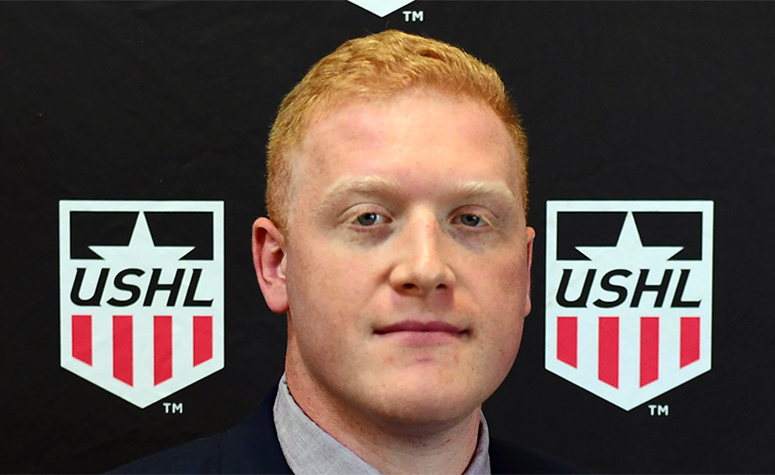
Luke Curadi is the league’s director of player personnel, overseeing myriad showcases and developmental events that help raise player profiles and identify candidates to eventually play in the USHL. This past spring, 30 players from around the U.S. and Canada who attended the ’05 USHL combine were chosen in the league’s futures draft on May 26. That averaged out to about 2.5 players drafted per team, according to Curadi.
“We’ve got the (USHL) combines every spring geared to players who are either junior age or close to it,” he said. “It’s a chance for the players to get one final look in with all USHL teams who are in attendance. Whether it opens the door for them to be drafted to the USHL or gives them an opportunity to make a team over the summer, it allows players to compete, get exposure and talk to interested teams.
“Later in the summer, we have combines for the younger birth years who are still a good two or three years away from the futures draft. We try to teach the players some developmental tactics that USHL teams use, and we do that by getting in some practices, scrimmages and conducting information sessions that help the players and their parents better understand the path to the NCAA and how the USHL can play a role in getting them there.”
The 30-year-old Cheshire, Conn., native went on to play D-1 hockey at RPI. Despite having immense size as a defenseman compared to his peers, Curadi took a longer and more patient route in his hockey development. Curadi started out in AA hockey at the lower minor levels, playing only one year of AAA before making the jump to junior.
Prior to playing in the ECAC with the Engineers, Curadi played in what is now the Eastern Hockey League with the Hartford Junior Wolfpack. He then went to British Columbia to play with a top Junior A program in Penticton with the Vees. In 2010-11, Curadi was a member of the USHL’s Dubuque Fighting Saints Clark Cup championship-winning squad, coached by Jim Montgomery. His teammates on the Saints included NHLers Johnny Gaudreau, Zemgus Girgensons, Joakim Ryan, Riley Barber and Will Butcher.
“The USHL was my goal growing up ever since I was 14 or 15 years old,” he said. “That was kind of the league when I was coming up as a younger guy. It was still prep school, prep school, prep school in the Northeast and my parents were the ones who learned more about the USHL and explained to me that it was the best league in the country, you play against top competition, you’re pretty much guaranteed a Division 1 scholarship if you play in that league.”
He played one season in the ECHL then focused his energy on finding ways to stay connected to the game. Staying in the New England area, he was able to scout the region for the USHL's Green Bay Gamblers and the Jamestown Rebels of the NAHL. Curadi also was employed by International Scouting Services, an independent evaluation organization, to monitor the AHL and track the progress of young professional players.
Those experiences opened the door for Curadi to take his current position with the USHL. He’s looking forward to the challenges that go into having another full season but with anticipated fewer restrictions from the year before due to COVID.
“Our marquee event is the Fall Classic,” he said of the annual showcase scheduled in late September. “The USHL teams come into Pittsburgh to play two regular-season games to start off the regular season. In addition to that, we’ve got one of the premier youth events for the year outside of USA Hockey Nationals where we have some of the best programs in the country at the 14-U, 15-U, 16-U and 18-U levels have a chance to come in at the same time the USHL games are being played and showcase themselves to all the pro, college and junior scouts and coaches that are there.”
Although Curadi didn’t go on to have a long pro playing career, he credited the USHL for allowing him to be a four-year player at RPI, finishing his NCAA career as captain. Because the USHL is an older league on average than major juniors or even some of the Tier 2 leagues in Canada, it can take longer for players to get there, but in most cases, it is worth the wait.
“If you get drafted, great,” Curadi said to players who might be mulling over the benefits of attending a USHL combine if offered the opportunity. “If not, teams are still going to be following you the next year. It’s important, especially in a year like COVID, to understand that no evaluation is a bad evaluation."
As Curadi continues to climb the hockey ladder on the scouting and development side of things, his background and experiences give him a chance to reach the highest level one day.
“The first and most important thing is that you love the game,” he said. “We’re not doing it for a six- or seven-figure paycheck, we’re doing it because we love hockey. If your passion for the game gives you more opportunities to make a good living down the road, that’s great, but we do it because we love it.”