Throughout my coaching career, I’ve had to listen to parents and players who claim that a certain head coach has it out for them for “personal reasons.” I understand their frustration, but also recognize their biases. I went through it myself with my own daughter. Still, I’ve always told them, “Coaches want to win. Period. And they’re going to play the kids who they think give them the best chance to win.”
Reality, I’ve learned, isn’t that black and white. The more I dug into this topic, the more I realize that there are many, many types of coaches. Good, bad and ugly. I still believe, or at least want to believe, that most fall into the “good” category. But it would be naive to think they all do. Some are control freaks, and that’s being kind. Others are little Napoleons, egomaniacs who are far more concerned about satisfying their own selfish needs instead of developing young men or women.
Here’s a great example, drawn from one of the goalie groups I belong to on Facebook. I really felt bad for this particular goalie mom, who was obviously reaching out for support.
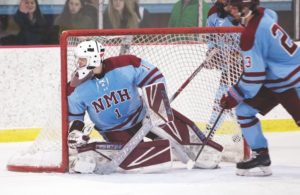
“How do you handle your child being humiliated by his coach? My son had a tough weekend in net, lost two games, 12-0 and 8-1, (while) they were playing teams that were obviously above their level of play,” wrote the distraught parent. “Last night at practice, the coach came up to my son in the dressing area next to the rink and proceeded to tell my son that all the teammates are calling him lazy, and he agrees. If my son doesn’t try hard at practice he will be benched! Yet none of the practices are built to work the goalies. Half the time my son and the other goalie are standing around waiting for instruction.”
How do you respond to that? Tricky, right? But there’s more.
“Seeing my peewee come home in tears ripped my heart out,” she wrote. “A coach that shames, bullies, humiliates and degrades children has no right on the ice.”
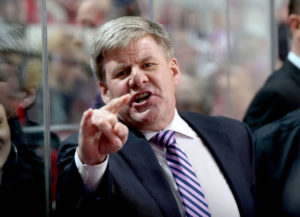
Of course, she’s absolutely on the money. There is no excuse for this kind of behavior. None. And yet it does happen. Worse, when we turn a blind eye to it, it festers. I was riveted by the case against Calgary Flames coach Bill Peters, who has since resigned.
Peters' behavior when he was coaching in major junior in 2009-10 was exposed when Akim Aliu recently said the coach would address him in derogatory terms, including the infamous “N-bomb.” Other players quickly supported Aliu’s claims, and others surfaced to say Peters had abused them as well. Peters’ actions, frankly, were despicable. Yet far too many hockey fans supported him.
In a number of online forums, people rushed to defend Peters, saying he shouldn’t be punished, or even held accountable, for actions that happened a decade ago. Some even said things “were different back then.” I didn’t buy it. I’m 62. That stuff was never acceptable. Not ever. Not when I was in high school in the 1970s, and not when I was in college in the ’80s. Did it happen? You bet. Was it wrong? Absolutely.
The same holds for the reported antics of former Toronto Maple Leafs head coach Mike Babcock, and Chicago Blackhawks assistant Marc Crawford.
So I don’t cut Peters (or Babcock, or Crawford) any slack. And neither should parents. There’s often a very fine line between calling out a coach, and enabling a child who is uncomfortable with being pushed. But that’s a line that parents need to walk.
You need to be vigilant.
My own daughter played for a number of coaches. Some were great. Some should never be allowed near a sheet of ice, or a locker room. Once, she called from the parking lot, because the program director (not even her coach, because the program didn’t have one for her team) ripped her for having the audacity to show up for practice in a game jersey. This was a program where fewer than half the girls typically showed for practice, yet this knucklehead decided to chastise one of the kids who actually made the effort. What kind of “coach” does that?
I was furious, but told my daughter to let it slide. The season was ending, and it would be one of the last times she would have to deal with this jerk. It wasn’t worth the additional aggravation. But the more I thought about it, the more I realized that I should have said something to the owners of the program. When you’re in the middle of it, it’s hard to step back and assess things without emotion. But you need to try, for the sake of your child.
According to Jim Thompson, executive director of the Positive Coaching Alliance, many types of coaches among the 2.5 million adults have trained as volunteer coaches. There are coaches who, once you start talking about positive coaching, say, “This is what I want to be,” Thompson said. That’s the coach you want.
Unfortunately, there are coaches who simply shouldn’t be working with kids. These folks don’t have the technical skills, life experiences or understanding of the game to motivate their players, said Dr. Kody Moffat of the American Academy of Pediatric’s Council on Sports Medicine and Fitness.
If you’re dealing with a bad coach, discuss any problems with him or her in an honest and straightforward manner. Tell them how their behavior is affecting your child. Sometimes it’s just a communication glitch. Sometimes it’s something more. If you’re not satisfied, go up the ladder to address your concerns. That’s your job. If the program leaders aren’t responsive, that’s all you need to know. Find your child another program.
And another thing
Generally speaking, I’m a fan of Brian Burke, the ex-Providence College player who has had a nice run of posts with the Canucks, Ducks, Maple Leafs and Flames.
Recently, though, Burke unveiled just how uninformed he is regarding the goaltending position. On TSN’s Hockey Central radio program, Burke was asked if it was time to get rid of the trapezoid behind the net, which restricts where a goaltender can play the puck behind the goal line. Burke said, essentially, not a chance. He said he likes the trapezoid, arguing it was a reflection of the “evolution” of the game. And he couldn’t be more wrong.
The trapezoid is a reflection of how this great game has been dumbed down. The trapezoid is a phony way to allow teams to simply dump the puck into the corner, and let forwards plaster D-men against the boards to separate them from the puck.
There’s no talent involved in the dump-and-chase game. It’s simply a track meet. It’s not about puck possession; it’s about puck separation. Meanwhile, the trapezoid prevents talented goaltenders from using their own skills. It’s a short-sighted, artificial response in the NHL’s quest for more goals.
You want to increase scoring? First, adopt an Olympic sheet for all new rinks to create more space. Second, get rid of idiotic video replay review of offside calls. Roughly 98 percent of the calls that negate goals show a player offside by a fraction of an inch. The offside rule is designed to prevent chippy hanging by the goal. If a linesman misses a call by a fraction of an inch, it’s certainly not violating the spirit of the rule. The “offending” player is still on the freakin’ blue line!
So, in a league starving for goals, they’re allowing opposing coaches to overturn goals based on inches. Simply dumb. Let the goalies play the pucks, and let the linesmen make offside calls.
Brion O’Connor is a Boston-based writer and owner of Inspired Ink Communications. He is also a longtime hockey coach and player, specializing in goaltending instruction. Learn more at TheGoalieGuru.com.