Nothing has been a more hot-button topic in college hockey over the last two months than the NCAA Transfer Portal.
In a new phenomenon, the NCAA is allowing players to enter into the transfer portal. Players opting to go into the transfer portal are not required to transfer or guaranteeing they will transfer, but it leaves the door open — and allows other schools’ coaches to speak with them.
The transfer portal first made major news this year in New England when Holy Cross freshman forward Matt Barry went into the transfer portal during the first semester. He has since transferred to Miami (Ohio).
Transfers, especially grad transfers who can play immediately, can have a major impact for a team. After transferring from St. Lawrence, Jacob Pritchard was the second-leading scorer for UMass and just signed a NHL entry level contract with the Carolina Hurricanes.

This spring has seen plenty of action in the transfer portal — and opinions vary widely. Smaller schools are worried they will be losing players to more established programs hoping to swoop up grad transfers. Bigger programs haven’t been immune to players entering the portal as at least two Boston University players have been linked to it.
Here are the players in the NCAA Transfer Portal with connections to New England, including ones who were being pursued by colleges in the region:
- Drew Blackmun, So., F, Northeastern
- Ryan Cook, Jr., D, Merrimack — Niagara
- Logan Coomes, Jr., F, Merrimack — Alaska-Fairbanks
- Logan Halliday, So., G, Merrimack
- Bobby Hampton, So., F, Northeastern
- Jacob Hayhurst, Jr., F, Rensselaer
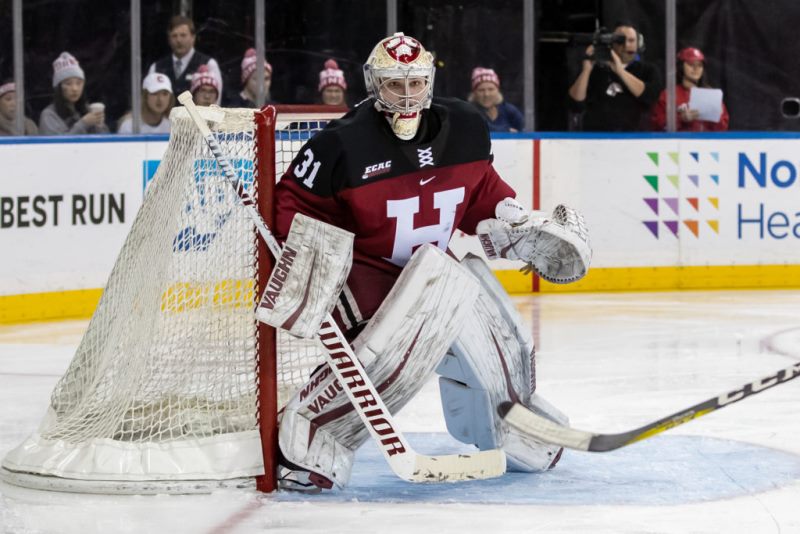
- Michael Lackey, Jr., G, Harvard — Providence
- Francis Marotte, Jr., G, Robert Morris — Clarkson
- Cole McBride, Jr., F, Merrimack — Alaska-Anchorage
- Chase Olsen, Fr., F, Merrimack
- Craig Pantano, Jr., G, Merrimack
- Cole Paskus, So., F, UMass Lowell
- Max Prawdzik, Jr., G, Boston University — Arizona State
- Ryan Ruck, Jr., G, Northeastern
- Eetu Selanne, So., F, Northeastern
- Shane Switzer, Jr., D, Boston University — Michigan
- Sam Tucker, Jr., G, Yale
- Brendan van Riemsdyk, Jr., F, New Hampshire — Northeastern
There could be a few more players in the transfer portal, but these are ones known for sure. The question now turns to why there is such controversy regarding the transfer portal.
The transfer portal obviously makes it easier for student-athletes to transfer to other schools as their name goes into a database that coaches from around the country can access. There’s less need for a middle man such as an advisor to help with soliciting interest.
Part of the reason players are entering the portal is their desire to play for a better program or for an increased chance of playing for a championship. However, and this is where the controversy lies, some of the players entering the portal aren’t doing so on their own accord.
Many of the players listed above are in the portal because they were cut or asked to not return by the coaching staff of the school they were at. Is it an uncomfortable situation, especially for an underclassman who will have to sit out a season? Absolutely, but it’s not as cut and dry as many people who are outraged tend to think it is.
The argument that coaches can move from school to school without sitting out a year is a valid one, and one that the NCAA will likely have to look at in the near future. Letting it be a free-for-all could have serious repercussions, especially for the smaller or lesser programs.
When new coaching staffs come in, often times players are asked to leave the program. It has happened recently at Merrimack and happened at UMass a few years ago. This isn’t something that is out of the ordinary in all realms of life, but it is an issue that raises eyebrows.
There’s a key argument against the folks who rant and rave on social media and message boards about over-committing and cutting players from programs. It’s not that unprecedented in academia, outside of athletics.
When a student is accepted into a college, it is written on the acceptance letter that the student must maintain a certain GPA or adhere to certain societal norms. When a student accepts an academic scholarship, that student is expected to keep a certain GPA.
What’s the difference between that and when college coaches expect players to continue developing and performing to a certain standard on the ice? There have been cases of players who’ve received a commitment and then stopped working as hard to continue improving.
In the case of one of the players cut from a program who is listed on the portal above, coaches at that school believed he wasn’t training and taking care of his off-ice obligations to the standard they expected.
Are there cases where coaches made a mistake in evaluating a player? Absolutely. Should coaches be held more accountable for committing kids without having any real intention of taking them in if the said player doesn’t pan out? Yes.
However, this whole issue has many layers to it. It’s not always as simple as fans believe. College hockey is still a great avenue for players to play at a high level and obtain a great education at the same time.