Ice hockey is a fast-paced, skilled sport that requires high levels of dedication and training in order to rise to the highest ranks. One player on the ice, however, requires a completely different skill set to thrive — goalies.
Often, goalies can feel left out of practice plans at a young age due to their unique requirements and lack of coaching resources. When it comes to off-ice training considerations for goalies, they should train like a regular player with some special considerations for the demands of their position. These qualities are: strength, hip mobility, conditioning, acceleration and multi-direction core strength.
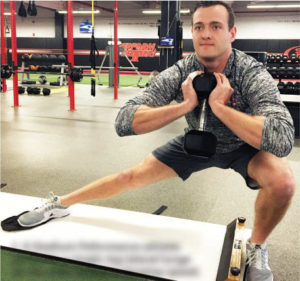
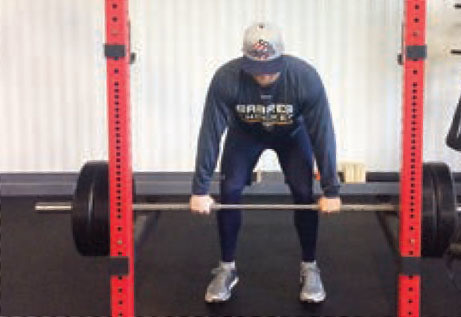
When it comes to strength training for goalies, most of the same considerations can be made for goalies as for skaters. Goalies need to have the ability to create force into the ice in order to position themselves quickly. Generating force requires underlying strength and power that can be developed the same way a position player would. It’s a common misconception that goalies who lift weights will lose the ability to move quickly on the ice. General exercises that improve strength can be single-leg split squats, one-arm row, deadlifts, pull-ups and push-ups.
Linear and lateral acceleration is important for a goalie to get to specific positions as quickly as possible. Off-ice training that can improve this quality are lower-body plyometrics. Plyometrics refer to drills that create a lot of force in a short period of time, such as jumping. Great drills to incorporate the ability to accelerate are lateral bounds, skipping for height and short-distance sprints. These drills are general but help build the overall acceleration ability of the goalie. Plyometrics are meant to be done with understanding of volume and intensity. With plyometric training, the objective is to accumulate high-quality work, not just high volume.
There are two styles of pace in which a goalie needs to condition for prior to the season. The first one is practice ready. Practice ready for a goalie means that they must be ready to stop excessive numbers of shots during one session. Practices are typically built around the number of players in a specific on-ice group. If there are only one or even two goalies, then they will be the one trying to block the majority of the shots. Being game ready is different in a way where goalies will see significantly less shots then they saw in practice and have more high-pressure situations where they have to make the right decision.
Goalies need to have adequate mobility in order to contort their bodies into demanding positions to stop pucks. These positions place a large demand on the hips, which can cause injuries to goalies who lack the proper mobility. Gaining mobility is not as easy as stretching your hamstrings. Mobility of a joint happens when the body has control of the joint and allows it to move through the range of motion without perceiving an internal fear of injury. Some players will have structural pathology considerations to the hip that might influence their style of play.
Physical preparation for ice hockey goalies should follow similar protocols as a skater, with specific considerations for mobility and conditioning. Goalies need to train hard in order to help generate power to improve their overall quickness. Goalies who add strength training into their routine will not find themselves losing their ability to make saves that require rapid movements or mobility.